Bridging the Academia-Industry gap: Upskilling engineering students for future work life
This thesis examines the gap between engineering education and industry skill demands, showing that leadership and upskilling programs can help develop essential soft skills such as creativity, self-awareness, empathy, and leadership needed for future engineering careers.
Authors: Anna Martinsson & Emelie Jägerström
Examiner: Philip Gerlee
Supervisor: Greta Braun
Co-supervisor: Torbjörn Lundh
Year: 2024
The industry's skill demand is an emerging issue and concerns about skill gaps have increased worldwide in the past few years. This study focuses particularly on the academia-industry gap, meaning the skills gap between the skills practised in engineering education and the industrial skill demand. Several studies stress the necessity for soft skills and there is an ongoing shift within industry towards softer, value-based, and human-centred skills. Employers look for people that possess interpersonal and social competencies as well as the technical skills and to bridge the gap between industry's demand and the supply of workforce, upskilling programmes have emerged on the market.
While previous studies have primarily focused on skill gaps in general within leadership development or upskilling programmes, this case study, conducted at UNITECH International's leadership development programme for engineering students, aims to provide insight into the specic skill gap referred to as the academia-industry gap. Additionally, it seeks to map out the inuencing factors in the design of such upskilling programmes, with a particular focus on didactics. This is essential as previous studies have shown a lack of deeper exploration of the didactical perspective, which is crucial for enhancing eective learning and development.
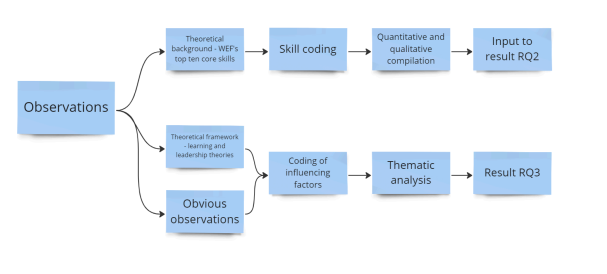
The study was conducted through observations carried out during two separate weeks of in-person coaching modules, where students received education and coaching aimed for personal growth, enhancing their leadership abilities and equipping them to eectively navigate future challenges. Surveys were also administered to gather students ' perceptions of their previous engineering education and their participation in the program.
The case study reveals an existing gap between engineering education and industry skill demand, encompassing four key areas of skills: Creative Thinking, Motivation and Self-awareness, Empathy and Active Listening, and Leadership and Social Inuence. Additionally, the study indicates that UNITECH International in general bridges this gap eectively, with the exception of Creative Thinking, which requires an increased focus. Finally, the study identies 33 sub-categories of inuencing factors in leadership development programmes, classied into six overarching categories: Programme Relevance, Organisation and Structure, Teaching, Social Environment, Fostering Growth, and Working Life Orientation. These ndings can be valuable for educators, coaches, and programme designers to successfully and eectively equip engineering students with the necessary skills for their future careers.

Comments